Solusi teknis
Kemajuan teknologi prostetik: material, teknik, dan kekuatan bukti ilmiah
 Lê Ngọc Hoàn Kandidat Doktor · Magister · Insinyur Prostetik & Ortotik — Sertifikasi praktik internasional CPO – ISPO Category I
Selama 30 tahun prostesis berkembang dari kayu, kulit, dan logam menjadi serat karbon, silikon, mikroprosesor, hingga terhubung langsung dengan tulang dan saraf. Artikel ini meninjau 12 teknologi: mana yang buktinya kuat, mana yang masih terbatas atau eksperimental.

Selama 30 tahun prostesis berkembang dari kayu, kulit, dan logam menjadi serat karbon, silikon, sendi berprosesor mikro, hingga terpasang langsung ke tulang dan dikendalikan sinyal saraf. Pertanyaan yang tepat bukan “mana yang paling modern?”, melainkan “mana yang terbukti membantu dan cocok untuk saya?”.
Berikut ringkasan bukti ilmiah (tinjauan sistematis, meta-analisis, uji acak) untuk 12 teknologi; tautan PubMed ada di akhir artikel.
Poin utama
- Bukti relatif kuat: lutut berprosesor mikro (MPK); targeted muscle reinnervation (TMR).
- Bermanfaat, bukti terbatas: liner silikon dan soket total surface bearing (TSB), suspensi vakum aktif, osseointegrasi, pergelangan kaki bermotor, RPNI, prostesis polipropilena (teknologi ICRC).
- Banyak dipakai tetapi manfaatnya kecil: kaki karbon ESR hanya mengurangi energi berjalan sekitar 2,7% dibanding kaki SACH.
- Menjanjikan, masih eksperimental: soket cetak 3D dan CAD/CAM, kaki bionik berkendali saraf (AMI), umpan balik sensorik untuk tangan prostetik.

Bukti ilmiah
- Meta-analisis Hahn dkk. (Disabil Rehabil 2022; 2.366 pasien, 704 dengan mobilitas terbatas K2): MPK mengurangi jatuh (Hedges g −0,59) dan rasa takut jatuh. Penulis bekerja untuk Ottobock.
- Kuhlmann dkk. (Jerman, 2020): C-Leg menurunkan rawat inap akibat jatuh dari 134 menjadi 20 per 1.000 orang-tahun; sekitar EUR 16.123 per QALY (tanpa diabetes) dan EUR 20.332 (dengan diabetes). Swedia, usia >65 tahun: Kenevo sekitar EUR 11.369 per QALY.
- Gardiner dkk. (meta-analisis 10 studi, 2016): energi berjalan dengan kaki ESR = 97,3% dari kaki SACH.
- Pergelangan kaki bermotor: energi 5% lebih rendah saat menanjak 3–6° (2018), tetapi uji acak silang (2021) tidak menemukan perbedaan umum.
- Osseointegrasi (Kunutsor, 2018): kemampuan berjalan dan kualitas hidup membaik, tetapi angka infeksi 1–77%; belum ada uji acak.
- TMR (Dumanian, Ann Surg 2019, 28 pasien): setelah 1 tahun skor nyeri phantom turun 3,2 poin vs −0,2 pada terapi standar (p = 0,03 pada analisis longitudinal).
- AMI (Nature Medicine 2024, 7 orang): kecepatan jalan maksimum 41% lebih tinggi dibanding amputasi konvensional.
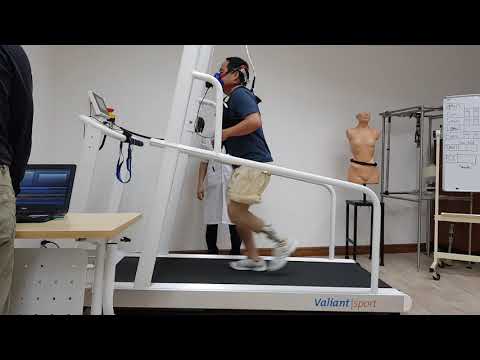
- Penelitian klinik sendiri (Le dkk., J Prosthet Orthot 2021): pada pelari dengan amputasi bawah lutut, vakum aktif menurunkan konsumsi oksigen dari 29,2 menjadi 24,6 mL/kg/menit dan kenyamanan soket naik 33% (satu kasus). Rink 2016 (uji acak): oksigenasi puntung lebih baik; Rosenblatt 2017: risiko jatuh berulang pada amputasi bawah lutut turun hampir 75%.
Tabel ringkasan: manfaat dan kekuatan bukti
| Teknologi | Manfaat yang terbukti | Kekuatan bukti |
|---|---|---|
| Lutut berprosesor mikro | Lebih sedikit jatuh dan rasa takut jatuh | Sedang |
| TMR | Nyeri phantom berkurang | Sedang (1 uji acak kecil) |
| Liner silikon + TSB | Suspensi lebih baik, nyaman | Rendah – sedang |
| Vakum aktif | Volume puntung stabil, kulit lebih sehat | Rendah – sedang |
| Osseointegrasi | Berjalan dan kualitas hidup lebih baik dari soket | Rendah (tanpa uji acak) |
| Kaki karbon ESR | ≈2,7% energi lebih hemat | Sedang, manfaat kecil |
| Pergelangan kaki bermotor | −5% energi saat menanjak; bervariasi | Rendah |
| Pergelangan kaki berprosesor mikro | Lebih stabil di lereng | Rendah |
| RPNI | Lebih sedikit neuroma dan nyeri phantom | Rendah |
| Cetak 3D, CAD/CAM | Cepat, dapat disesuaikan | Rendah |
| Polipropilena (ICRC) | Murah, awet | Rendah – sedang |
| AMI, kaki bionik | Kecepatan mendekati orang sehat | Sangat rendah (7 orang) |
Saran praktis
- Dasar lebih dulu: soket yang pas, liner yang sesuai, penyelarasan yang benar, dan latihan berjalan.
- Prostesis polipropilena tetap pilihan wajar untuk anggaran terbatas.
- MPK layak dipertimbangkan untuk amputasi atas lutut dengan risiko jatuh tinggi; manfaat utamanya adalah keamanan.
- Jika berisiko nyeri saraf, diskusikan TMR atau RPNI dengan dokter bedah sebelum amputasi.
- Osseointegrasi, pergelangan kaki bermotor, dan AMI hanya untuk kasus terpilih di pusat khusus.
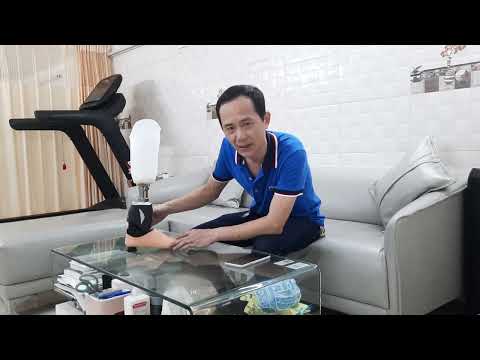
Video dari kanal YouTube Lê Hoàn




Jika Anda atau keluarga mempertimbangkan prostesis baru atau peningkatan, hubungi kami untuk pemeriksaan dan konsultasi langsung: +84 985 211 888 (telepon / Zalo).
Referensi
- Hahn A, Bueschges S, Prager M, Kannenberg A. The effect of microprocessor controlled exo-prosthetic knees on limited community ambulators: systematic review and meta-analysis. Disabil Rehabil. 2022;44(24):7349–7367. PMID: 34694952.
- Stevens PM, Wurdeman SR. Prosthetic knee selection for individuals with unilateral transfemoral amputation: a clinical practice guideline. J Prosthet Orthot. 2019. PMID: 30662248.
- Kuhlmann A, Krüger H, Seidinger S, Hahn A. Cost-effectiveness and budget impact of the microprocessor-controlled knee C-Leg in transfemoral amputees with and without diabetes mellitus. Eur J Health Econ. 2020;21(3):437–449. PMID: 31897813.
- Kuhlmann A, Hagberg K, Kamrad I, et al. The Kenevo microprocessor-controlled prosthetic knee compared with non-microprocessor-controlled knees in individuals older than 65 years in Sweden. Prosthet Orthot Int. 2022;46(5):414–424. PMID: 35511441.
- Chen C, Hanson M, Chaturvedi R, et al. Economic benefits of microprocessor controlled prosthetic knees: a modeling study. J Neuroeng Rehabil. 2018. PMID: 30255802.
- Gardiner J, Bari AZ, Howard D, Kenney L. Transtibial amputee gait efficiency: energy storage and return versus solid ankle cushioned heel prosthetic feet. J Rehabil Res Dev. 2016;53(6):1133–1138. PMID: 28355033.
- Vanicek N, Huang C, Davie-Smith FC, et al. Prescription of prosthetic ankle-foot mechanisms after major lower limb amputation (protocol). Cochrane Database Syst Rev. 2025;8:CD016076. PMID: 40856180.
- Montgomery JR, Grabowski AM. Use of a powered ankle-foot prosthesis reduces the metabolic cost of uphill walking and improves leg work symmetry in people with transtibial amputations. J R Soc Interface. 2018;15(145):20180442. PMID: 30158189.
- Kim J, Wensman J, Colabianchi N, Gates DH. The influence of powered prostheses on user perspectives, metabolics, and activity: a randomized crossover trial. J Neuroeng Rehabil. 2021;18(1):49. PMID: 33726802.
- Safari MR, Meier MR. Systematic review of effects of current transtibial prosthetic socket designs – Part 1: Qualitative outcomes. J Rehabil Res Dev. 2015;52(5):491–508. PMID: 26436666.
- Safari MR, Meier MR. Systematic review of effects of current transtibial prosthetic socket designs – Part 2: Quantitative outcomes. J Rehabil Res Dev. 2015;52(5):509–526. PMID: 26436733.
- Le H, Guerra G, Sasaki K, Phongphibool S, Smith JD, Wongpanya J, Rakbanboong T, Siriwatsopon J. Oxygen consumption and speed performance of a runner with amputation wearing an elevated vacuum running prosthesis (case report). J Prosthet Orthot. 2021;33(1):73–79.
- Rink C, Wernke MM, Powell HM, et al. Elevated vacuum suspension preserves residual-limb skin health in people with lower-limb amputation: randomized clinical trial. J Rehabil Res Dev. 2016;53(6):1121–1132. PMID: 28355039.
- Rosenblatt NJ, Ehrhardt T. The effect of vacuum assisted socket suspension on prospective, community-based falls by users of lower limb prostheses. Gait Posture. 2017;55:100–104. PMID: 28433866.
- Samitier CB, Guirao L, Costea M, Camós JM, Pleguezuelos E. The benefits of using a vacuum-assisted socket system to improve balance and gait in elderly transtibial amputees. Prosthet Orthot Int. 2016;40(1):83–88.
- CADTH. Elevated vacuum suspension systems for adults with amputation: clinical effectiveness, cost-effectiveness, and guidelines. Rapid Response Report, 2020.
- Baars ECT, Geertzen JHB. Literature review of the possible advantages of silicon liner socket use in trans-tibial prostheses. Prosthet Orthot Int. 2005;29:27–37.
- User experience of transtibial prosthetic liners: a systematic review. Prosthet Orthot Int. 2017;41(1). PMID: 26932981.
- 3D printed transtibial prosthetic sockets: a systematic review. PLoS One. 2022;17(10):e0275161. PMID: 36215238.
- Jensen JS, Nilsen R, Thanh NH, Saldana A, Hartz C. Quality of polypropylene sockets for trans-tibial prostheses in low-income countries. Prosthet Orthot Int. 2006;30(1):45–59. PMID: 16739781.
- Efficacy of rehabilitation after provision of ICRC lower limb prostheses in low-income and middle-income countries. Prosthet Orthot Int. 2024. PMID: 37870366.
- Kunutsor SK, Gillatt D, Blom AW. Systematic review of the safety and efficacy of osseointegration prosthesis after limb amputation. Br J Surg. 2018;105(13):1731–1741. PMID: 30307036.
- Banducci E, Al Muderis M, Lu W, Bested SR. The safety of one-stage versus two-stage approach to osseointegrated prosthesis for limb amputation. Bone Jt Open. 2023;4(7):539–550. PMID: 37475711.
- Consensus statement on the prevention, diagnosis, and management of infection following transcutaneous osseointegration. OTA Int. 2025. PMID: 40071170.
- Dumanian GA, Potter BK, Mioton LM, et al. Targeted muscle reinnervation treats neuroma and phantom pain in major limb amputees: a randomized clinical trial. Ann Surg. 2019;270(2):238–246. PMID: 30371518.
- Valerio IL, Dumanian GA, Jordan SW, et al. Preemptive treatment of phantom and residual limb pain with targeted muscle reinnervation at the time of major limb amputation. J Am Coll Surg. 2019. PMID: 30634038.
- Prophylactic regenerative peripheral nerve interfaces for prevention of postamputation pain: a systematic review and meta-analysis. J Clin Med. 2026. PMID: 42590062.
- Song H, Hsieh TH, Yeon SH, et al. Continuous neural control of a bionic limb restores biomimetic gait after amputation. Nat Med. 2024;30(7):2010–2019. PMID: 38951635.
- Technological advances in prosthesis design and rehabilitation following upper extremity limb loss. Curr Rev Musculoskelet Med. 2020. PMID: 32488625.
- Applications of sensory feedback in motorized upper extremity prosthesis: a review. Expert Rev Med Devices. 2014;11(5):499–511. PMID: 24928327.
Solusi terkait

Soket Vakum Pasif vs Aktif: Apa Bedanya?
Perbandingan dua teknologi suspensi vakum untuk soket prostetik - katup satu arah pasif dan pompa elektronik aktif.
Soket Vakum Pasif vs Aktif: Apa Bedanya?
5+ Keunggulan Sendi Lutut Mikroprosesor
Sendi lutut elektronik memadukan sensor dan prosesor untuk meniru gerakan alami dan mengurangi risiko jatuh.
5+ Keunggulan Sendi Lutut Mikroprosesor
4+ Keunggulan Sendi Lutut Prostetik Hidraulik
Sendi lutut prostetik hidraulik memberikan pola jalan lebih alami dan stabilitas lebih baik; penelitian pada teknologi lutut mikroprosesor/hidraulik menunjukkan penurunan risiko jatuh yang signifikan.
4+ Keunggulan Sendi Lutut Prostetik HidraulikAnda atau keluarga membutuhkan saran?
Buat janji pemeriksaan langsung di Hanoi atau kirim berkas Anda untuk konsultasi jarak jauh. Kami membalas dalam 24 jam.