技术方案
假肢技术的进步:材料、技术与证据强度
 Lê Ngọc Hoàn 博士在读 · 硕士 · 假肢矫形工程师 — 国际执业资格 CPO – ISPO Category I
过去30年,假肢从木头、皮革和金属发展到碳纤维、硅胶、微处理器,乃至与骨骼和神经直接连接。本文梳理12项技术:哪些已有可靠的科学证据,哪些证据仍有限或仍处于试验阶段。

过去30年,假肢从木头、皮革和金属发展到碳纤维、硅胶、微处理器控制的关节,乃至直接固定于骨骼并由神经信号控制。正确的问题不是“哪种最先进?”,而是“哪种已被证明有效,并且适合我?”。
下面汇总了12项技术的科学证据(系统综述、荟萃分析、随机对照试验),PubMed链接见文末。
要点
- 证据相对可靠:微处理器膝关节(MPK);靶向肌肉神经移植术(TMR)。
- 有益但证据有限:硅胶内衬与全接触式(TSB)接受腔、主动真空悬吊、骨整合、动力踝关节、RPNI、聚丙烯假肢(红十字国际委员会技术)。
- 使用广泛但获益小:碳纤维储能足(ESR)与SACH脚相比,行走能耗仅降低约2.7%。
- 前景可期但仍在试验:3D打印和CAD/CAM接受腔、神经控制仿生腿(AMI)、假手的感觉反馈。

科学证据
- Hahn等人荟萃分析(Disabil Rehabil 2022;2,366名患者,其中704名为活动受限K2级):MPK减少跌倒(Hedges g −0.59)和跌倒恐惧。作者受雇于Ottobock。
- Kuhlmann等人(德国,2020):C-Leg将跌倒相关住院从每1,000人年134次降至20次;每获得一个QALY约16,123欧元(无糖尿病)和20,332欧元(有糖尿病)。瑞典65岁以上:Kenevo每QALY约11,369欧元。
- Gardiner等人(10项研究荟萃分析,2016):ESR足的行走能耗为SACH足的97.3%。
- 动力踝关节:在3–6°上坡时能耗降低5%(2018),但随机交叉试验(2021)未发现总体差异。
- 骨整合(Kunutsor,2018):行走能力和生活质量改善,但感染率在1%至77%之间;尚无随机试验。
- TMR(Dumanian,Ann Surg 2019,28名患者):1年后幻肢痛评分TMR组下降3.2分,标准治疗组为−0.2分(纵向分析p = 0.03)。
- AMI(Nature Medicine 2024,7人):最大步行速度比常规截肢者高41%。
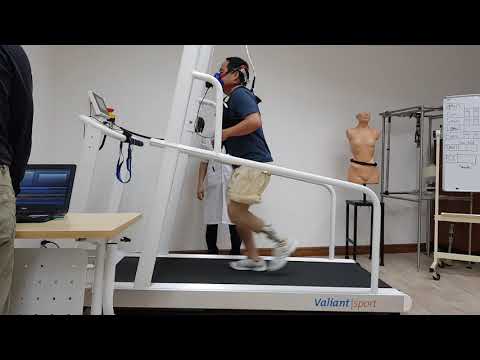
- 本诊所自己的研究(Le等,J Prosthet Orthot 2021):一名膝下截肢跑者使用主动真空后,耗氧量从29.2降至24.6 mL/kg/分,接受腔舒适度提高33%(单一病例)。Rink 2016(随机试验):残肢氧合改善;Rosenblatt 2017:膝下截肢者多次跌倒风险降低近75%。
汇总表:获益与证据强度
| 技术 | 已证实的获益 | 证据强度 |
|---|---|---|
| 微处理器膝关节 | 减少跌倒和跌倒恐惧 | 中等 |
| TMR | 减轻幻肢痛 | 中等(1项小型RCT) |
| 硅胶内衬+TSB | 悬吊更好,更舒适 | 低–中等 |
| 主动真空悬吊 | 残肢体积稳定,皮肤更健康 | 低–中等 |
| 骨整合 | 行走和生活质量优于接受腔 | 低(无RCT) |
| 碳纤维ESR足 | 能耗约降低2.7% | 中等,获益小 |
| 动力踝关节 | 上坡能耗降低5%;因人而异 | 低 |
| 微处理器踝关节 | 坡道上更稳定 | 低 |
| RPNI | 神经瘤和幻肢痛减少 | 低 |
| 3D打印、CAD/CAM | 快速、可个性化 | 低 |
| 聚丙烯(红十字) | 便宜耐用 | 低–中等 |
| AMI仿生腿 | 步速接近非截肢者 | 极低(7人) |
实用建议
- 先打好基础:合适的接受腔、恰当的内衬、正确的对线和步态训练。
- 预算有限时,聚丙烯假肢仍是合理的选择。
- 跌倒风险高的膝上截肢者值得考虑MPK,主要好处是安全。
- 如有神经痛风险,截肢前请与外科医生讨论TMR或RPNI。
- 骨整合、动力踝关节和AMI仅适用于专科中心经筛选的病例。
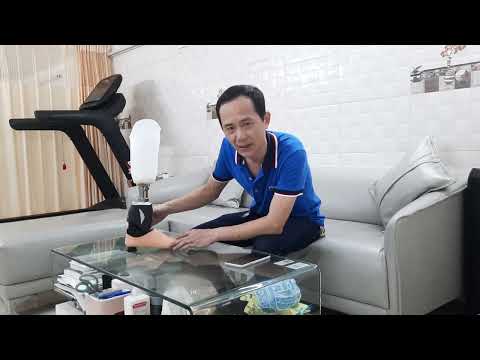
Lê Hoàn YouTube 频道视频




如果您或家人正在考虑装配或升级假肢,欢迎联系我们进行面诊和咨询:+84 985 211 888(电话 / Zalo)。
参考文献
- Hahn A, Bueschges S, Prager M, Kannenberg A. The effect of microprocessor controlled exo-prosthetic knees on limited community ambulators: systematic review and meta-analysis. Disabil Rehabil. 2022;44(24):7349–7367. PMID: 34694952.
- Stevens PM, Wurdeman SR. Prosthetic knee selection for individuals with unilateral transfemoral amputation: a clinical practice guideline. J Prosthet Orthot. 2019. PMID: 30662248.
- Kuhlmann A, Krüger H, Seidinger S, Hahn A. Cost-effectiveness and budget impact of the microprocessor-controlled knee C-Leg in transfemoral amputees with and without diabetes mellitus. Eur J Health Econ. 2020;21(3):437–449. PMID: 31897813.
- Kuhlmann A, Hagberg K, Kamrad I, et al. The Kenevo microprocessor-controlled prosthetic knee compared with non-microprocessor-controlled knees in individuals older than 65 years in Sweden. Prosthet Orthot Int. 2022;46(5):414–424. PMID: 35511441.
- Chen C, Hanson M, Chaturvedi R, et al. Economic benefits of microprocessor controlled prosthetic knees: a modeling study. J Neuroeng Rehabil. 2018. PMID: 30255802.
- Gardiner J, Bari AZ, Howard D, Kenney L. Transtibial amputee gait efficiency: energy storage and return versus solid ankle cushioned heel prosthetic feet. J Rehabil Res Dev. 2016;53(6):1133–1138. PMID: 28355033.
- Vanicek N, Huang C, Davie-Smith FC, et al. Prescription of prosthetic ankle-foot mechanisms after major lower limb amputation (protocol). Cochrane Database Syst Rev. 2025;8:CD016076. PMID: 40856180.
- Montgomery JR, Grabowski AM. Use of a powered ankle-foot prosthesis reduces the metabolic cost of uphill walking and improves leg work symmetry in people with transtibial amputations. J R Soc Interface. 2018;15(145):20180442. PMID: 30158189.
- Kim J, Wensman J, Colabianchi N, Gates DH. The influence of powered prostheses on user perspectives, metabolics, and activity: a randomized crossover trial. J Neuroeng Rehabil. 2021;18(1):49. PMID: 33726802.
- Safari MR, Meier MR. Systematic review of effects of current transtibial prosthetic socket designs – Part 1: Qualitative outcomes. J Rehabil Res Dev. 2015;52(5):491–508. PMID: 26436666.
- Safari MR, Meier MR. Systematic review of effects of current transtibial prosthetic socket designs – Part 2: Quantitative outcomes. J Rehabil Res Dev. 2015;52(5):509–526. PMID: 26436733.
- Le H, Guerra G, Sasaki K, Phongphibool S, Smith JD, Wongpanya J, Rakbanboong T, Siriwatsopon J. Oxygen consumption and speed performance of a runner with amputation wearing an elevated vacuum running prosthesis (case report). J Prosthet Orthot. 2021;33(1):73–79.
- Rink C, Wernke MM, Powell HM, et al. Elevated vacuum suspension preserves residual-limb skin health in people with lower-limb amputation: randomized clinical trial. J Rehabil Res Dev. 2016;53(6):1121–1132. PMID: 28355039.
- Rosenblatt NJ, Ehrhardt T. The effect of vacuum assisted socket suspension on prospective, community-based falls by users of lower limb prostheses. Gait Posture. 2017;55:100–104. PMID: 28433866.
- Samitier CB, Guirao L, Costea M, Camós JM, Pleguezuelos E. The benefits of using a vacuum-assisted socket system to improve balance and gait in elderly transtibial amputees. Prosthet Orthot Int. 2016;40(1):83–88.
- CADTH. Elevated vacuum suspension systems for adults with amputation: clinical effectiveness, cost-effectiveness, and guidelines. Rapid Response Report, 2020.
- Baars ECT, Geertzen JHB. Literature review of the possible advantages of silicon liner socket use in trans-tibial prostheses. Prosthet Orthot Int. 2005;29:27–37.
- User experience of transtibial prosthetic liners: a systematic review. Prosthet Orthot Int. 2017;41(1). PMID: 26932981.
- 3D printed transtibial prosthetic sockets: a systematic review. PLoS One. 2022;17(10):e0275161. PMID: 36215238.
- Jensen JS, Nilsen R, Thanh NH, Saldana A, Hartz C. Quality of polypropylene sockets for trans-tibial prostheses in low-income countries. Prosthet Orthot Int. 2006;30(1):45–59. PMID: 16739781.
- Efficacy of rehabilitation after provision of ICRC lower limb prostheses in low-income and middle-income countries. Prosthet Orthot Int. 2024. PMID: 37870366.
- Kunutsor SK, Gillatt D, Blom AW. Systematic review of the safety and efficacy of osseointegration prosthesis after limb amputation. Br J Surg. 2018;105(13):1731–1741. PMID: 30307036.
- Banducci E, Al Muderis M, Lu W, Bested SR. The safety of one-stage versus two-stage approach to osseointegrated prosthesis for limb amputation. Bone Jt Open. 2023;4(7):539–550. PMID: 37475711.
- Consensus statement on the prevention, diagnosis, and management of infection following transcutaneous osseointegration. OTA Int. 2025. PMID: 40071170.
- Dumanian GA, Potter BK, Mioton LM, et al. Targeted muscle reinnervation treats neuroma and phantom pain in major limb amputees: a randomized clinical trial. Ann Surg. 2019;270(2):238–246. PMID: 30371518.
- Valerio IL, Dumanian GA, Jordan SW, et al. Preemptive treatment of phantom and residual limb pain with targeted muscle reinnervation at the time of major limb amputation. J Am Coll Surg. 2019. PMID: 30634038.
- Prophylactic regenerative peripheral nerve interfaces for prevention of postamputation pain: a systematic review and meta-analysis. J Clin Med. 2026. PMID: 42590062.
- Song H, Hsieh TH, Yeon SH, et al. Continuous neural control of a bionic limb restores biomimetic gait after amputation. Nat Med. 2024;30(7):2010–2019. PMID: 38951635.
- Technological advances in prosthesis design and rehabilitation following upper extremity limb loss. Curr Rev Musculoskelet Med. 2020. PMID: 32488625.
- Applications of sensory feedback in motorized upper extremity prosthesis: a review. Expert Rev Med Devices. 2014;11(5):499–511. PMID: 24928327.


您或家人需要咨询吗?
预约河内到院评估,或发送资料进行远程咨询。我们会在24小时内回复。