Prosthetic limbs
Below-Knee Prosthesis: Socket Designs & Suspension Systems Compared
A full comparison of transtibial socket designs (PTB, supracondylar, total surface bearing) and suspension systems (pin/lock, sleeve, passive suction, active vacuum) — pros, cons, prevalence, scientific evidence and the matching components for each.

A below-knee (transtibial) prosthesis restores walking ability for people with an amputation through the lower leg who still retain their knee joint. Two independent layers determine how it performs: the socket design (how the load-bearing shell contacts the residual limb) and the suspension system (the mechanism that keeps the socket securely attached during movement). These two layers are independent but always paired — for example, a total surface bearing (TSB) socket can be combined with pin/lock, sleeve, passive suction, or active vacuum suspension. Each type is listed separately below, with its pros, cons, how common it is in clinical practice, and the relevant scientific evidence.


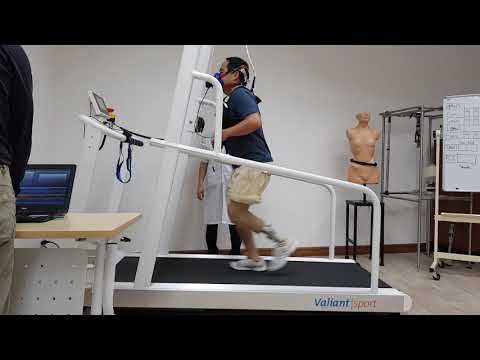
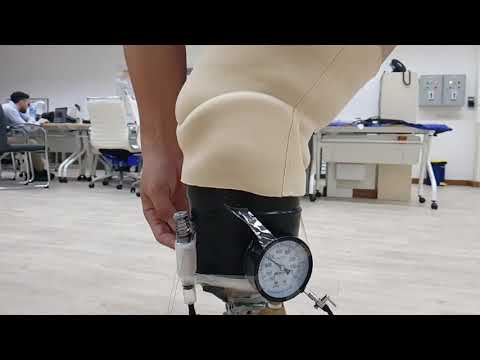
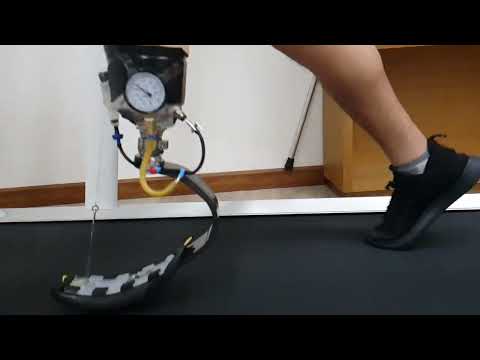
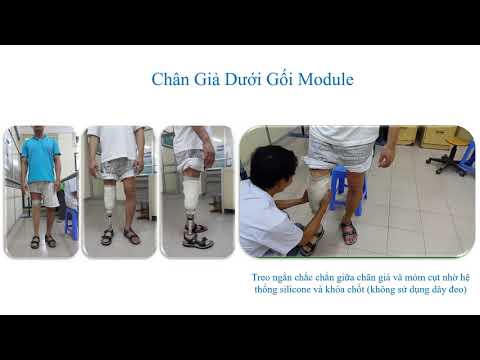
Videos from the Lê Hoàn YouTube channel

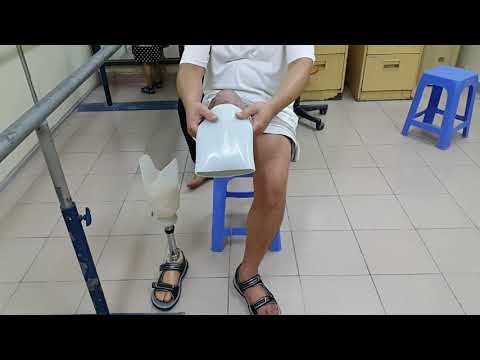
1. PTB Socket (Patellar Tendon Bearing)
How common it is: The classic design since the 1950s; still common early in rehabilitation or when the residual limb is still painful or oedematous.
Pros
- Low cost, simple to fabricate and adjust
- Suits long, bulbous-shaped residual limbs
- Often used early in the rehabilitation process
Cons
- Small bearing area concentrates pressure on the patellar tendon
- Does not self-suspend — needs a strap or sleeve
- Less cosmetic, less suited to sustained high activity
Scientific evidence: Per a 2024 review in Frontiers in Rehabilitation Sciences, PTB sockets with local rectification are preferentially indicated for long/oedematous limbs and the early rehabilitation stage.
2. Supracondylar Family — PTB-SC/SP, PTK, KBM (self-suspending)
How common it is: Moderately common; used when the residual limb is long enough with well-defined condyles and a liner is not required.
Pros
- Mechanically self-suspending, no external strap needed
- More stable than a plain PTB during activity
- No special liner required, moderate cost
Cons
- Harder to don and doff due to the condylar wrap
- Needs a sufficiently long limb with clear condyles for a secure fit
- Less adaptable as limb volume changes
Scientific evidence: The PTB-SC/PTS, PTB-SCSP, PTK (patellar-tendon kegel) and KBM (Kondylen-Bettung Munster) variants are described in current orthopaedic literature (Frontiers in Rehabilitation Sciences, 2024) as a self-suspending family built on the same supracondylar principle.
3. TSB Socket (Total Surface Bearing)
How common it is: Today's most common standard for active users with a mature, stable residual limb.
Pros
- Distributes load evenly across the surface, lowering peak pressure
- Better circulation, more comfortable for active use
- Pairs effectively with most modern suspension systems
Cons
- Higher cost than PTB
- Always requires a liner, which needs periodic replacement
- Requires more precise casting technique
Scientific evidence: Per an AAOP Critically Appraised Topic comparing TSB and PTB sockets, and a 2024 Frontiers in Rehabilitation Sciences review, TSB with an elastomeric liner is preferentially indicated for a mature, stable, non-oedematous residual limb.
4. Pin/Lock Suspension
How common it is: The most common suspension method in current clinical practice when paired with a TSB socket.
Pros
- Secure mechanical attachment
- Easy and quick to don and doff
- Suitable for most patients
Cons
- Sweating under the airtight liner
- The liner wears out and needs replacing every 6-12 months
- Per the literature, causes the most pistoning among modern suspension options
Scientific evidence: Per Hanger Clinic's clinical practice guideline on transtibial socket and suspension, among modern options pin/lock suspension permits the most pistoning, followed by suction suspension, with active vacuum suspension permitting the least.
5. Sleeve Suspension
How common it is: Used when a simpler, lower-cost option is needed or a pin liner is not suitable.
Pros
- Lower cost than pin/lock
- No metal pin liner required
- Easy to replace when worn
Cons
- Less secure than pin/lock
- Causes heat and skin irritation on the thigh
- Stretches over time and needs periodic replacement
Scientific evidence: Described in Hanger Clinic's clinical practice guideline as a simple way to create an airtight seal, typically used when a pin liner is not indicated.
6. Passive Suction Suspension
How common it is: Increasingly common as a middle ground between pin/lock and active vacuum suspension.
Pros
- No pump or battery, minimal maintenance
- Lower cost than active vacuum systems
- Reduces pistoning more effectively than pin/lock
Cons
- Negative pressure depends on walking activity, less stable than the active version
- Requires a perfectly airtight liner, which loses effect if torn
Scientific evidence: Per Hanger Clinic's guideline and Board et al. (Archives of Physical Medicine and Rehabilitation), passive suction suspension reduces pistoning and stabilises residual-limb volume better than traditional pin/lock suspension, though less so than active vacuum.
7. Active Vacuum Suspension — Mechanical Pump
How common it is: Common among highly active users who prefer not to rely on batteries or charging.
Pros
- No battery, durable, powered by the force of each step
- More stable negative pressure than passive suction
- Per the literature, the lowest pistoning among modern suspension options
Cons
- Higher cost than passive suction
- More complex mechanical construction requiring periodic maintenance
Scientific evidence: Per the NCBI Bookshelf health-technology review (Elevated Vacuum Suspension Systems for Adults with Amputation) and Board et al., active vacuum suspension provides the most secure suspension and lowest pistoning among modern options, at a higher cost and maintenance burden.
8. Active Vacuum Suspension — Electronic Pump
How common it is: Still limited due to higher cost; used for cases needing precise negative-pressure control or very high activity levels.
Pros
- Maintains stable negative pressure even while standing still
- Can display or alert on pressure levels
- Best proprioception and residual-limb volume stability among the options
Cons
- The highest cost among suspension systems
- Needs periodic charging/battery replacement and technical maintenance
Scientific evidence: Lê Ngọc Hoàn (doctoral candidate, Master's, engineer in prosthetics & orthotics; CPO – ISPO Category I)'s own study, published in JPO: Journal of Prosthetics and Orthotics (2021), on a running prosthesis using a vacuum-assisted socket system found clear benefits in comfort, proprioception and residual-limb volume stability during high-intensity activity. Note: the specific mechanical-vs-electronic distinction has not been separately studied in controlled trials — the difference is mainly one of engineering and maintenance.
In summary: for suspension stability (least pistoning), active Vacuum-Assisted Suspension (VAS) performs best, followed by passive suction suspension, then traditional pin/lock suspension — but each step up in performance comes with higher cost and maintenance needs. For socket design, TSB with a liner suits most active users today, while PTB and the supracondylar family still have a place early in rehabilitation or when the residual limb has not yet stabilised. The final choice always requires a hands-on assessment by a prosthetist, who evaluates limb shape, activity level and skin condition. Contact Lê Hoàn Prosthetics & Orthotics at hotline 0985211888 for advice on the below-knee solution best suited to you.
References
- Insights into the spectrum of transtibial prosthetic socket design from expert clinicians and their digital records — Frontiers in Rehabilitation Sciences (2024)
- Transtibial Socket Design, Interface, and Suspension — Hanger Clinic Clinical Practice Guidelines
- Elevated Vacuum Suspension Systems for Adults with Amputation: A Review of Clinical Effectiveness, Cost-Effectiveness, and Guidelines — CADTH / NCBI Bookshelf
- Board WJ, Street GM, Caspers C. Vacuum-Assisted Socket Suspension Compared With Pin Suspension for Lower Extremity Amputees — Archives of Physical Medicine and Rehabilitation
- Le H, Guerra G, Sasaki K, Rakbangboon T, Siriwatsopon J. Oxygen Consumption and Speed Performance of a Runner with Amputation Wearing an Elevated Vacuum Running Prosthesis — JPO: Journal of Prosthetics and Orthotics (2021)
- Comparison of the Total Surface-Bearing Socket and the Patellar Tendon-Bearing Socket — AAOP Critically Appraised Topic (Poole)
Related solutions

Hip Disarticulation Prosthesis
A hip disarticulation prosthesis restores mobility for people who have lost their entire lower limb from the hip joint, using modern socket design to rebuild standing and walking ability.
Hip Disarticulation Prosthesis
Fitting an Ankle Disarticulation Prosthesis
An ankle disarticulation prosthesis serves the lowest amputation level of the leg, preserving maximum natural weight-bearing function. Learn the fitting process and who needs this type of prosthesis.
Fitting an Ankle Disarticulation Prosthesis
A Trusted, Quality Address for Premium Prosthetic Legs
What a premium prosthetic leg is, the benefits it offers users, and why Lê Hoàn Orthotic Devices is a trusted choice for premium prosthetics.
A Trusted, Quality Address for Premium Prosthetic LegsDo you or a loved one need advice?
Book an in-person assessment in Hanoi or send your file for a remote consultation. We reply within 24 hours.