Technical solutions
Passive vs. Active Vacuum Sockets: What Is the Difference?
A comparison of two vacuum-suspension technologies for prosthetic sockets - the passive one-way valve and the electronically controlled active pump - to help users choose the right solution.

Most prosthetic-limb users today rely on a socket fitted with a one-way valve that creates passive vacuum suspension. The sensitivity of the valve determines how much negative pressure is achieved - the more sensitive the valve, the more secure the fit and the more confident the gait. Yet many valves on the market, even from well-known brands, have low sensitivity, producing only about -6 to -8 InHg of vacuum.
The passive mechanism works as follows: each time the user stands and lifts the residual limb, air is pushed out of the socket, and repeated cycles build up negative pressure. In practical testing at Le Hoan Orthopedic Clinic with an improved valve, vacuum readings while walking reached about -12 InHg and stayed around -5 InHg even while standing still, before gradually returning to zero after a few minutes of rest. The main drawback of passive systems is that they cannot control how airtight the socket remains: during fast walking or running, "pistoning" - the up-and-down movement of the residual limb inside the socket - can cause fatigue, discomfort, or even prolonged pain.
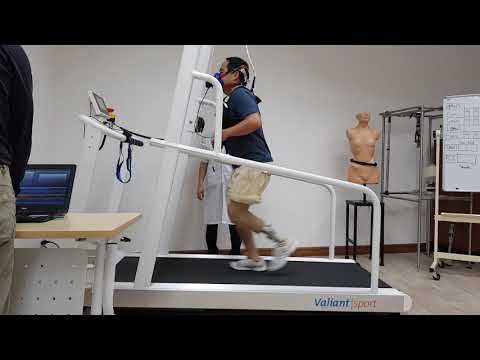
Active vacuum systems use an electronically controlled vacuum pump, letting the user actively select and maintain high, low, or moderate negative pressure according to need - particularly useful for high-intensity sports. In testing, negative pressure during fast running reached as high as -16 InHg while the residual limb remained remarkably stable and comfortable, significantly reducing soreness compared with passive systems.
The benefits of vacuum suspension are also documented in the scientific literature: a study by Board and colleagues published in Archives of Physical Medicine and Rehabilitation found that vacuum-assisted socket suspension is associated with better residual-limb volume stability and reduced pistoning compared with traditional pin-lock suspension. Le Ngoc Hoan (doctoral candidate, Master's, engineer in prosthetics & orthotics; CPO – ISPO Category I), has his own published research in JPO: Journal of Prosthetics and Orthotics (2021) on a running prosthesis using a vacuum-assisted socket system (VASS), which found benefits in comfort, proprioception, and volume stability for a below-knee amputee runner.
Whichever system is chosen, the most important factor remains an accurate, well-optimized socket design for each individual. For everyday walking and routine activities, a passive one-way valve is a reliable solution. For those who want to optimize athletic performance and actively control suction pressure, an active vacuum system is well worth considering.


Videos from the Lê Hoàn YouTube channel


Related solutions

5+ Advantages of Microprocessor Knee Joints
Microprocessor knee joints integrate sensors and a processor to mimic natural movement, boost safety, and reduce fall risk. Learn about their construction and 5+ key advantages, backed by clinical evidence.
5+ Advantages of Microprocessor Knee Joints
4+ Advantages of Hydraulic-Controlled Prosthetic Knee Joints
Hydraulic prosthetic knee joints deliver a more natural gait, greater stability on uneven terrain, and — per research on microprocessor/hydraulic knee technology — a measurable reduction in falls and fear of falling.
4+ Advantages of Hydraulic-Controlled Prosthetic Knee Joints
Prosthetic Socket Design Technology: The Foundation of an Effective Prosthesis
The socket is the most critical part of a prosthesis; newer technologies like the Silcare Breathe liner and Vacuum-Assisted Socket Suspension are backed by scientific research, including Lê Ngọc Hoàn's own study published in JPO (2021).
Prosthetic Socket Design Technology: The Foundation of an Effective ProsthesisDo you or a loved one need advice?
Book an in-person assessment in Hanoi or send your file for a remote consultation. We reply within 24 hours.